Apple: We have 20 percent of the U.S. ebook market, article.
Most estimates had placed Apple’s U.S. ebook market share at around 10 percent, with Amazon’s Kindle at 50 to 60 percent and Barnes & Noble’s Nook at 25 percent. But Moerer said the iBookstore’s market share was 20 percent in the first few months after the iBookstore’s launch, Publishers Weekly reports, and is about 20 percent now.
If true, this is quite the surprise to me and I'm sure most other commentators. Amazon's bookstore is much larger and seems more relevant, and true to Amazon's goal, it is indeed very handy for me that I can read my Kindle books on virtually any screen device I own. This can't be said for Apple's iBooks. Hell, it won't be until the next OS upgrade that you even can read iBooks books on Apple's own Mac, three and a half years after the first iPad! A failure of grand proportions.
The iBooks store, apart from initiating software which makes sophisticated enhanced text books (which can only be sold via iBooks!) does not seem to most of us to have been doing anything much, or gotten much attention, it's just been sitting there like a wallflower at a school dance.
If the 20% number is true, I will guess this is simply due to the great popularity of the iPad, and a lot of those customers using the iBooks store by default, perhaps not even being aware that there are plenty other book reading apps for the iPad. Beyond the Kindle app, there is the Nook app and the Kobo app, and a plethora of independent apps.
Normally I like it when Apple succeeds, but they are not the underdog anymore, and the fact is that despite them using "the standard format" ePub, due to DRM and lack of apps on other platforms, their books are much more locked down than Amazon's Kindle books are. This is stupid. Apple did a very smart thing when the other executives convinced Jobs, who was adamantly against it, to make iPod and iTunes work with Windows. They should remember this.
Of course the only right thing for society is to make books DRM-free, so there is no big literacy disaster if Apple or Amazon goes down one day.
Thursday, June 13, 2013


Monday, June 10, 2013
Apple, power savings, and iOS 7 goodies
(See keynote below.) Apple is doing a lot of work in hardware, in the OS, and in apps to reduce power usage. And I must say I'm pretty impressed. For example if you keep a little eye on what your machine is doing (via for example the Activity Monitor utility/app), you will often discover that some app or apps, very often web browsers, are sitting in the background, not even being used, and just draining the power, completely uselessly.
So one of Apple's really intelligent inventions in upcoming OS "Mavericks" (they've given up on big cats) is that if an app is using a lot of CPU power, and you cover the app with another app (you don't even have to put it in the background), CPU usage immediately drops! Hurrah!!
There are also developments in more effective memory usage.
Frankly things like this are desperately needed. I have what was the top of the line Mac Pro four years ago, and I bought it with oodles and oodles of RAM, and yet it is often slowing down, stalling, or running up against memory walls.
----
Oh, by the way, one of the cool things coming up in iOS 7: multitasking for all apps, not just a select few. They are carefully managed still so as not to drain the handheld device's limited resources, but it should improve things. For example I've noticed that only a couple of Apple's own apps are currently allowed to download anything while in the background, other apps are stopped doing it after ten seconds or so of being put in the background.
There's also a new control panel which I really like: you just slide up from the bottom, and it's there, and includes loudness, brightness, airplane mode, and a few more things. Here it is:
 ... I'm a bit more doubtful about the translucency which dominates iOS 7... but we'll see how it goes. Maybe it does add a bit of color and feeling of context, without distracting.
So one of Apple's really intelligent inventions in upcoming OS "Mavericks" (they've given up on big cats) is that if an app is using a lot of CPU power, and you cover the app with another app (you don't even have to put it in the background), CPU usage immediately drops! Hurrah!!
There are also developments in more effective memory usage.
Frankly things like this are desperately needed. I have what was the top of the line Mac Pro four years ago, and I bought it with oodles and oodles of RAM, and yet it is often slowing down, stalling, or running up against memory walls.
----
Oh, by the way, one of the cool things coming up in iOS 7: multitasking for all apps, not just a select few. They are carefully managed still so as not to drain the handheld device's limited resources, but it should improve things. For example I've noticed that only a couple of Apple's own apps are currently allowed to download anything while in the background, other apps are stopped doing it after ten seconds or so of being put in the background.
There's also a new control panel which I really like: you just slide up from the bottom, and it's there, and includes loudness, brightness, airplane mode, and a few more things. Here it is:
Apple keynote, iOS 7 and hardware
 Update: photo of the upcoming Mac Pro. Click to enlarge. Damn, that's hot, I get technolust.
 ====
Apple has just finished the keynote for the 2013 Developers' Conference. I really liked it, it actually rekindled my enthusiasm for Apple products, which had been flattening out a little.
A MacBook Air 13" with 12 hours battery life (apparently not with Retina Display?). a beautiful and exciting new iOS. (Finally after all these years getting rid of those photograpic icons. They are not icons, folks, they are photos.) Preview of the upcoming Mac Pro. Like I predicted, they went overboard with radical design and compactness! (It's only ten inches tall.) But the specs sound amazing. I just hope it is quiet! Please! (The colossal step down in noise from the G5 to Intel Macs was a lifesaver for me, seriously. I hope they have not endangered that by the compactness of the next Mac Pro.)
... But then I may go for another kind of machine next time. An iMac or laptop easily handles normal "pro" stuff these days, the Mac Pro is for people who edit cinema movies and such stuff.


I'm guessing sales of current Mac Pros are already in the toilet, since they release such a dramatic preview.


... Aha, they are doing something about cooling. Cool.
Weeeeell, they said this too about the PowerMac G5, and that thing was not quiet, lemme tell you. Fingers crossed.

Tuesday, June 4, 2013
The Last Bookshop
This short-film is very well made, and funny. And I can't deny feeling sorry that book stores are closing. I also miss LP cover art.
But still: it's the content which matter, not the book. If you take out the content from paper books, all you have is dead trees.
And the content is not about to die. On the contrary, ebooks and ereaders are already making stories and dissertations much cheaper and much more widely available in all the countries of the world. Surely nobody is against that, even if they are nostalgic for the smell of slightly mouldy paper?
But still: it's the content which matter, not the book. If you take out the content from paper books, all you have is dead trees.
And the content is not about to die. On the contrary, ebooks and ereaders are already making stories and dissertations much cheaper and much more widely available in all the countries of the world. Surely nobody is against that, even if they are nostalgic for the smell of slightly mouldy paper?
The Last Bookshop home.
Android, oh dear...
Maybe it was a mistake to get an Android phone. But the HTC One got so much praise, and so has the lastest versions of the OS! So I thought that it was Good Now, like the supposed experts said.
I hardly know where to start, it seems almost everything I try to do is awkward or buggy or just doesn't work.
And it is typically like that. On all my devices (I have at least 5 Android devices). I don't understand how people can stand it.
I hardly know where to start, it seems almost everything I try to do is awkward or buggy or just doesn't work.
- I bought two movies. They won't play. Two contacts with support have not helped.
- I side-loaded some of my own ripped videos. I had to try three different video apps before I found one which would play not only the sound, but the picture as well. (Good old VLC Player worked, though it's in Beta here).
- I can't find a setting to use the phone as a disk when connected by USB, so I have to use the HTC sync software. It's very buggy and freezes all the time.
- The app started with automatically trying to import all my music, which would have used up virtually all the space. I had to find that setting and turn it off. (Why not ask first?)
- I have installed correct ringtone files in the Ringtones folder. They play fine when I click on them, but the Ringtones Setting can't see them! (Help videos I've seen says it should.) Rebooting didn't help.
- I have tried shortening the ringtone files' names, but now I can't find the folder in the HTC sync app...
And it is typically like that. On all my devices (I have at least 5 Android devices). I don't understand how people can stand it.
Part of the reason I have them at all is Apple's stupid resistance towards bigger phones. I hope they get over that soon, so I can get a 5-inch phone/ereader which just works.
Update:
I solved the Ringtone deal. I was told that .m4r is the right appendix for ringtones, and my ringtones were indeed like that, so that was hunky-dory.
But then I noticed that for some reason there were already two custom ringtones in the Ringtones folder (the regular ones are of course hidden elsewhere), and those had the extension .ogg for some reason. So I tried to change the extension of mine to that, and that made it work. Geez. If .m4r is standard, why doesn't the HTC One recognize them?
Update:
I solved the Ringtone deal. I was told that .m4r is the right appendix for ringtones, and my ringtones were indeed like that, so that was hunky-dory.
But then I noticed that for some reason there were already two custom ringtones in the Ringtones folder (the regular ones are of course hidden elsewhere), and those had the extension .ogg for some reason. So I tried to change the extension of mine to that, and that made it work. Geez. If .m4r is standard, why doesn't the HTC One recognize them?
Thursday, May 30, 2013
HTC One
I've changed from iPhone 4S to HTC One, an Android phone.
It's more beautiful than the iPhone (who'd have thunked that?), and the bigger screen is a current-day necessity. It's a good pocket ereader. The hardware is state of the art, just lovely.*
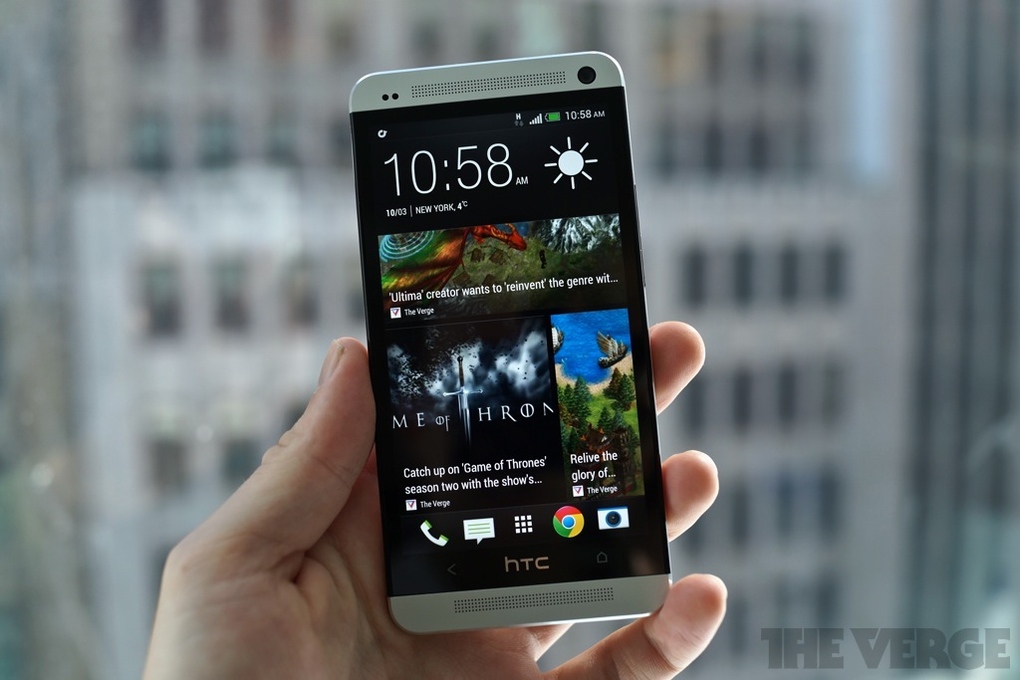
I must say though, I don't quite understand the enthusiasm with which some people, like Apple connoisseurs Andy Ihnatko and Guy Kawasaki, have taken to Android. They quote many reasons, but they all seem trivial to me. As an OS it still feels a little awkward and buggy to me. (And confusing: not two devices work the same.) A typical example: in the notifications list, two notifications from the very first time I opened it are stuck. They do not disappear like the others when I clear the list.
Another example: I googled for the "best podcast app for Android", and got the clear candidate. But it's not very good. The buttons are too small, and the time line hardly visible.
(Not that the iOS podcast apps are great. It's odd, you'd think that would be an easy interface to make, but instead Apple's own app, for example, has the whole middle of the screen, over 70%, doing nothing, and has the controls crammed together, too small, at the top and the bottom. Just brain-dead decisions. But that's not normal, on the whole I have much more fun with iOS apps.)
*OK, it is more than state of the art, it's overkill. Who has eyes resolving four hundred and seventy pixels per inch?! I can just barely tell the difference between 200 and 300.
It's more beautiful than the iPhone (who'd have thunked that?), and the bigger screen is a current-day necessity. It's a good pocket ereader. The hardware is state of the art, just lovely.*
I must say though, I don't quite understand the enthusiasm with which some people, like Apple connoisseurs Andy Ihnatko and Guy Kawasaki, have taken to Android. They quote many reasons, but they all seem trivial to me. As an OS it still feels a little awkward and buggy to me. (And confusing: not two devices work the same.) A typical example: in the notifications list, two notifications from the very first time I opened it are stuck. They do not disappear like the others when I clear the list.
Another example: I googled for the "best podcast app for Android", and got the clear candidate. But it's not very good. The buttons are too small, and the time line hardly visible.
(Not that the iOS podcast apps are great. It's odd, you'd think that would be an easy interface to make, but instead Apple's own app, for example, has the whole middle of the screen, over 70%, doing nothing, and has the controls crammed together, too small, at the top and the bottom. Just brain-dead decisions. But that's not normal, on the whole I have much more fun with iOS apps.)
*OK, it is more than state of the art, it's overkill. Who has eyes resolving four hundred and seventy pixels per inch?! I can just barely tell the difference between 200 and 300.
Wednesday, May 29, 2013
The "book" is either dying or flourishing!
Australian publishers say the book is not dead, it is being redefined by new technology, article.
So while the printed page may be less popular than in previous times, publishers are confident that reading will remain a mainstream pleasure - so long as readers keep adapting their definition of the word 'book'.
And thereby hangs a tale.
If a book is by definition on paper, then the Book is in trouble. Paperbook stores are closing in droves. But if it includes ebooks, then we may be on the verge of the Golden Age for books.
I have been chastised by helpful and enthusiastic readers that an ebook is not a book, because a book is a bound bundle of paper sheets.
And indeed from the dictionary it seems this is so.
But what's a book lover to do? My feelings tell me that Two Cities is a book, no matter if I read it in a "book" or on my Kindle, or iPad, or my phone.
A writer says he is writing a "book", and he is not talking about the bound paper, he is talking about the conceptual content.
And people all over the world is talking about books they have read, even though many of those books may never have seen bound paper.
So I think at some point, like has happened with the majority of words, the dictionaries will have to include this new definition of "book".
How you define it precisely is tricky, and for more orderly heads than mine.
So while the printed page may be less popular than in previous times, publishers are confident that reading will remain a mainstream pleasure - so long as readers keep adapting their definition of the word 'book'.
And thereby hangs a tale.
If a book is by definition on paper, then the Book is in trouble. Paperbook stores are closing in droves. But if it includes ebooks, then we may be on the verge of the Golden Age for books.
I have been chastised by helpful and enthusiastic readers that an ebook is not a book, because a book is a bound bundle of paper sheets.
And indeed from the dictionary it seems this is so.
But what's a book lover to do? My feelings tell me that Two Cities is a book, no matter if I read it in a "book" or on my Kindle, or iPad, or my phone.
A writer says he is writing a "book", and he is not talking about the bound paper, he is talking about the conceptual content.
And people all over the world is talking about books they have read, even though many of those books may never have seen bound paper.
So I think at some point, like has happened with the majority of words, the dictionaries will have to include this new definition of "book".
How you define it precisely is tricky, and for more orderly heads than mine.
My Writing Spot updated
My Writing Spot updated. Online/tablet writing app updated, posted on my other blog.
Tuesday, May 21, 2013
"FindTheBest"
A new ereader comparison site: FindTheBest.
I haven't tested it seriously, but it seems to be advanced.
The webmaster informs me:
...we have one feature that really helps users make quick, informed decisions and that is our Smart Rating. The Smart Rating is determined by using the weighted average of 4 different well-respected expert reviews. Therefore, even if a user sorts and filters by screen size and price, they will still always be able to see how that e-Reader stacks up to the other ones.
With that and ReaderRocket.com we now have at least two such dedicated sites, I think that is indicative of how serious and solid the ereader now is becoming in our culture.
How long before it'll be the default choice, over paper books, at least in the US? Can't be long, maybe less than five years.
Other English-speaking countries are a couple of years behind, simply because Amazon (having the break-through product, Kindle) works in the US first. And the rest of the planet has the additional hurdle that they can't generally just use the existing e-published ebooks, they have to get their own publishers to publish ebooks in their own language, a process I bet can easily add 3-5 years to the whole thing.
In other words, if viewed globally, I think roughly a decade before ereaders are dominant.
I haven't tested it seriously, but it seems to be advanced.
The webmaster informs me:
...we have one feature that really helps users make quick, informed decisions and that is our Smart Rating. The Smart Rating is determined by using the weighted average of 4 different well-respected expert reviews. Therefore, even if a user sorts and filters by screen size and price, they will still always be able to see how that e-Reader stacks up to the other ones.
With that and ReaderRocket.com we now have at least two such dedicated sites, I think that is indicative of how serious and solid the ereader now is becoming in our culture.
How long before it'll be the default choice, over paper books, at least in the US? Can't be long, maybe less than five years.
Other English-speaking countries are a couple of years behind, simply because Amazon (having the break-through product, Kindle) works in the US first. And the rest of the planet has the additional hurdle that they can't generally just use the existing e-published ebooks, they have to get their own publishers to publish ebooks in their own language, a process I bet can easily add 3-5 years to the whole thing.
In other words, if viewed globally, I think roughly a decade before ereaders are dominant.
Saturday, May 18, 2013
Sony A4-sized digital paper notepad
This is highly interesting. Not just for a notepad, but also potentially for a reader. This is only 350 grams, not much heavier than an iPad Mini, but much bigger. And harder to break too, due to no glass.
And the video image may fool me here, but it looks like the background is closer to white than earlier E-ink displays. If that's so, I consider that quite important.
And the video image may fool me here, but it looks like the background is closer to white than earlier E-ink displays. If that's so, I consider that quite important.
Hybrid displays
I have long had a feeling that eventually and maybe pretty soon, we will have displays which combine the advantages of LCD (color, clarity, speed) with those of e-ink (less eye-stress, better outdoors, longer battery life). There really wouldn't be any need to buy and carry two devices if the various strengths can be combined in one.
It seems progress is made, though it's unclear how far this is from market-mature.
Thanks to The Kindle Chronicles (and thanks for the testimonial, Len!). Len wonders if this kind of technology will end up being another nail in the coffin of long-form reading. Well... first of all, like Len says, it's gonna happen, so we'll have to deal with it somehow. Second, if one needs one's books to be on a separate, "dumb" device in order not to be distracted by Angry Avians and Tweets (angry or not), then I'd consider the problem being in the reader rather than the device.
And by the way, if enough people have that problem, there will probably still be some devices made which are only ereaders, not multi-purpose devices.
The question is of course if the market is big enough. Note for example that there has never been a successful "typewriter" type laptop, despite many writers wanting one. And that's probably because the number of people who'd want such a limited device is too small.
(The Alphasmart Neo by the way is very close, you can only write on it, not even format anything, and the keyboard is great, better than on any notebook I've tried. But to my taste, it's hobbled by a too-low-contrast display, like the Kindle was until last year.)
It seems progress is made, though it's unclear how far this is from market-mature.
Thanks to The Kindle Chronicles (and thanks for the testimonial, Len!). Len wonders if this kind of technology will end up being another nail in the coffin of long-form reading. Well... first of all, like Len says, it's gonna happen, so we'll have to deal with it somehow. Second, if one needs one's books to be on a separate, "dumb" device in order not to be distracted by Angry Avians and Tweets (angry or not), then I'd consider the problem being in the reader rather than the device.
And by the way, if enough people have that problem, there will probably still be some devices made which are only ereaders, not multi-purpose devices.
The question is of course if the market is big enough. Note for example that there has never been a successful "typewriter" type laptop, despite many writers wanting one. And that's probably because the number of people who'd want such a limited device is too small.
(The Alphasmart Neo by the way is very close, you can only write on it, not even format anything, and the keyboard is great, better than on any notebook I've tried. But to my taste, it's hobbled by a too-low-contrast display, like the Kindle was until last year.)
Saturday, May 11, 2013
Changing mind takes time
I make fun (barely) of some who I think is too conservative, for example those who are too much enamoured by the smell of a paper book to imagine they could ever get the same pleasure from the same story in ebook form. But then I find that we all have mind inertia on some level, and usually we can't see it.
For example, it took me years of using digital cameras to really get used to the fact that I no longer had to pay for every frame I shot.
Similarly: a friend just mentioned a book she'd like to discuss with me if I'd read it. Well, I hadn't, but I looked at it and it was within my personal "easy-buy" range, the price limit under which I may buy a book just on the chance that I might like something in it. (This limit may change according to my current financial health and emotions.) So I just clicked Buy. I feel that if it turns out the book has nothing for me, well, basically nothing is wasted.
In contrast, the paperback was three times the price, plus shipping. But even if it had been as cheap, if I had been sitting there two weeks from now with a book which I'd gotten nothing from, holding a practically useless paper object in my hand, I would have felt a feeling of What a Waste.
Another example: I bought The Complete Virginia Woolf on a whim a few days ago. Earlier, it would have ballooned my already overflowing book shelves. Now it takes up no physical space and can be deleted in a second. Further, in case I hadn't liked it at all, who cares, because out-of-copyright books are free (or close to it if you want better formatting).
It also took me a while to get used to this. For a while, even after I "went over to" ebooks, I felt like I had to read every book I bought. And preferably pretty soon after I bought it. And preferably I should finish it too. In actual fact, neither of these things had been true for years, even with paper books, not since the even of online ordering. But it's only with ebooks, which are never a "waste", that I'm getting used to it, not caring how many unopened or unfinished books are on my device or in the cloud, and shamelessly hopping around between many books I'm reading or trying at once.
===
By the way, Woolf's The Voyage Out contains my second-favorite sentence ever (the first is in Gibson's Mona Lisa Overdrive. Amazingly, they both are descriptions of London!):
"In the streets of London where beauty goes unregarded, eccentricity must pay the penalty, and it is better not to be very tall, to wear a long blue cloak, or to beat the air with your left hand."
For example, it took me years of using digital cameras to really get used to the fact that I no longer had to pay for every frame I shot.
Similarly: a friend just mentioned a book she'd like to discuss with me if I'd read it. Well, I hadn't, but I looked at it and it was within my personal "easy-buy" range, the price limit under which I may buy a book just on the chance that I might like something in it. (This limit may change according to my current financial health and emotions.) So I just clicked Buy. I feel that if it turns out the book has nothing for me, well, basically nothing is wasted.
In contrast, the paperback was three times the price, plus shipping. But even if it had been as cheap, if I had been sitting there two weeks from now with a book which I'd gotten nothing from, holding a practically useless paper object in my hand, I would have felt a feeling of What a Waste.
Another example: I bought The Complete Virginia Woolf on a whim a few days ago. Earlier, it would have ballooned my already overflowing book shelves. Now it takes up no physical space and can be deleted in a second. Further, in case I hadn't liked it at all, who cares, because out-of-copyright books are free (or close to it if you want better formatting).
It also took me a while to get used to this. For a while, even after I "went over to" ebooks, I felt like I had to read every book I bought. And preferably pretty soon after I bought it. And preferably I should finish it too. In actual fact, neither of these things had been true for years, even with paper books, not since the even of online ordering. But it's only with ebooks, which are never a "waste", that I'm getting used to it, not caring how many unopened or unfinished books are on my device or in the cloud, and shamelessly hopping around between many books I'm reading or trying at once.
===
By the way, Woolf's The Voyage Out contains my second-favorite sentence ever (the first is in Gibson's Mona Lisa Overdrive. Amazingly, they both are descriptions of London!):
"In the streets of London where beauty goes unregarded, eccentricity must pay the penalty, and it is better not to be very tall, to wear a long blue cloak, or to beat the air with your left hand."
Sunday, May 5, 2013
Piracy not an issue after one year of selling DRM-free ebooks, says Tor Books
Piracy not an issue after one year of selling DRM-free ebooks, says Tor Books, article.
After nearly a year of selling ebooks free of DRM copy protection, Macmillan subsidiary Tor Books UK said that it has seen no increase in piracy on any of its properties. The company's editorial director elaborated in an extensive reflection on the decision earlier this week, writing, "The move has been a hugely positive one for us, [...] we’re still pleased that we took this step."
(Big article here.)
I am very pleased indeed to see this report, since DRM is a plaque upon the land, and simply based on fear rather than data. And especially since Tor is far from an insignificant publisher, so this should have a positive effect on other publishers considering the move, this might nudge the snowball further along, and eventually we may actually arrive in a world where, gasp!, you will not lose your book collection if you decide you want to use a Kobo instead of a Kindle, and where your books are safe from even the demise of Amazon or server crashes or whatnot.
Admittedly the situation is complicated a bit by Amazon's 'delightful' decision to use and stick to a proprietary format (.mobi), and I would guess that other device makers would need their permission to enable their readers to read the Kindle books, even with no DRM. I'm not sure where that would go. Amazon already allow their books to be read on other devices (virtually all of them), but that is happening in an app made by Amazon, which means that Amazon still have control over the whole thing and could remove the app, remove books, and whatnot.
"Control" is a central button, probably even more important than money in this whole thing. People and especially corporations, have deep, morbid fear of letting anything get out of their control.
---
I've just bought a Tor book (Halo Silentium) to try this. But it's not really obvious how to download the file so I can transfer it to my host of devices. On the Google Play Book store, the book opens in the web browser, there's no Download button that I can see.
Update: I found a button which claims to download an ePub file, but typically, though it's supposedly DRM free, it download a .acsm (Adobe Digital Editions) file, which is like a ticket permitting you to download the book. And like usual (I hate Adobe's update processes) ADE won't let me run it without updating it, and when I click update, for some reason it just starts my HTML editor app!! So I'm stuck there and I give up. (Maybe I can get it via my Kobo or Kindle and get it to the computer that way. But really, the computer should be the most direct and flexible option, shouldn't it?)
After nearly a year of selling ebooks free of DRM copy protection, Macmillan subsidiary Tor Books UK said that it has seen no increase in piracy on any of its properties. The company's editorial director elaborated in an extensive reflection on the decision earlier this week, writing, "The move has been a hugely positive one for us, [...] we’re still pleased that we took this step."
(Big article here.)
I am very pleased indeed to see this report, since DRM is a plaque upon the land, and simply based on fear rather than data. And especially since Tor is far from an insignificant publisher, so this should have a positive effect on other publishers considering the move, this might nudge the snowball further along, and eventually we may actually arrive in a world where, gasp!, you will not lose your book collection if you decide you want to use a Kobo instead of a Kindle, and where your books are safe from even the demise of Amazon or server crashes or whatnot.
Admittedly the situation is complicated a bit by Amazon's 'delightful' decision to use and stick to a proprietary format (.mobi), and I would guess that other device makers would need their permission to enable their readers to read the Kindle books, even with no DRM. I'm not sure where that would go. Amazon already allow their books to be read on other devices (virtually all of them), but that is happening in an app made by Amazon, which means that Amazon still have control over the whole thing and could remove the app, remove books, and whatnot.
"Control" is a central button, probably even more important than money in this whole thing. People and especially corporations, have deep, morbid fear of letting anything get out of their control.
---
I've just bought a Tor book (Halo Silentium) to try this. But it's not really obvious how to download the file so I can transfer it to my host of devices. On the Google Play Book store, the book opens in the web browser, there's no Download button that I can see.
Update: I found a button which claims to download an ePub file, but typically, though it's supposedly DRM free, it download a .acsm (Adobe Digital Editions) file, which is like a ticket permitting you to download the book. And like usual (I hate Adobe's update processes) ADE won't let me run it without updating it, and when I click update, for some reason it just starts my HTML editor app!! So I'm stuck there and I give up. (Maybe I can get it via my Kobo or Kindle and get it to the computer that way. But really, the computer should be the most direct and flexible option, shouldn't it?)
Tuesday, April 30, 2013
BlackBerry CEO Thinks Tablets Are Dead Within 5 Years
BlackBerry CEO Thinks Tablets Are Dead Within 5 Years, article.
“In five years," he said, "I don’t think there’ll be a reason to have a tablet anymore. Maybe a big screen in your workspace, but not a tablet as such. Tablets themselves are not a good business model.”
Holy wow. I agree with TMO's Bryan Chaffin:
I was literally rendered speechless (I have a witness) when I first read this stuff. I even wondered if Bloomberg was punking us, so incredibly stupid are these pronouncements.
To look at the success of the iPad and conclude that tablets will have run their course within five years is the single most myopic thing I have encountered from a corporate executive.
Maybe he is trying the trick of the old greek, who reasoned that it was better to be famous for something really stupid than to be forgotten, so he went and smashed things in a temple. I've forgotten his name.
“In five years," he said, "I don’t think there’ll be a reason to have a tablet anymore. Maybe a big screen in your workspace, but not a tablet as such. Tablets themselves are not a good business model.”
Holy wow. I agree with TMO's Bryan Chaffin:
I was literally rendered speechless (I have a witness) when I first read this stuff. I even wondered if Bloomberg was punking us, so incredibly stupid are these pronouncements.
To look at the success of the iPad and conclude that tablets will have run their course within five years is the single most myopic thing I have encountered from a corporate executive.
Maybe he is trying the trick of the old greek, who reasoned that it was better to be famous for something really stupid than to be forgotten, so he went and smashed things in a temple. I've forgotten his name.
Monday, April 22, 2013
Kobo Aura HD: better screen than Kindle Paperwhite (updated)
[Update late 2013: the latest update to the Kindle Paperwhite brings it pretty much in line with the Aura.]
Just got my Kobo Aura HD today, and I really like the screen.
It's nothing dramatic, it doesn't show in photographs all that well, but to my eyes the Aura's screen is clearly:
The last being perhaps the big event, since everybody oooh'd and aaah'd about how the Kindle Paperwhite's screen with front-light was more evenly lit than the Kobo Glo's.
(Note: I think though that the Kobo screen's blacks are not *quite* as black as those on the KPW.)
I love the fine-tuning of the text you can do on the Kobo, much finer than on the Kindle, and it even includes the weight of the font (how bold it is), steplessly!
I think I will make one of my custom strap handles for the back of the Aura, and use that as my go-to reader for long text.
I'd say, though, that the differences are not so big that it makes changing over a clear choice. But if you want a new B/W ereader anyway, it's possibly the best one right now as screens go.


I'd have to say though, that this device joins all E-ink ereaders in being a bit slow, compared to, say, and iPad. I'm not really sure why, it's not like they are asked to play a 3D game. They approve a bit year over year, but it still takes a second for them to respond to a button push, etc. I think they will feel much nicer to use when they get this fixed.
Also on the downside, it's a bit heavier than the KPW, for bed reading you feel it.
Just got my Kobo Aura HD today, and I really like the screen.
It's nothing dramatic, it doesn't show in photographs all that well, but to my eyes the Aura's screen is clearly:
- A step bigger
- A step brighter (adjustable)
- A step sharper
- A step more evenly lit
The last being perhaps the big event, since everybody oooh'd and aaah'd about how the Kindle Paperwhite's screen with front-light was more evenly lit than the Kobo Glo's.
(Note: I think though that the Kobo screen's blacks are not *quite* as black as those on the KPW.)
I love the fine-tuning of the text you can do on the Kobo, much finer than on the Kindle, and it even includes the weight of the font (how bold it is), steplessly!
I think I will make one of my custom strap handles for the back of the Aura, and use that as my go-to reader for long text.
I'd say, though, that the differences are not so big that it makes changing over a clear choice. But if you want a new B/W ereader anyway, it's possibly the best one right now as screens go.
Kindle Paperwhite on the left, Kobo Aura HD on the right.


I'd have to say though, that this device joins all E-ink ereaders in being a bit slow, compared to, say, and iPad. I'm not really sure why, it's not like they are asked to play a 3D game. They approve a bit year over year, but it still takes a second for them to respond to a button push, etc. I think they will feel much nicer to use when they get this fixed.
Also on the downside, it's a bit heavier than the KPW, for bed reading you feel it.
Subscribe to:
Posts (Atom)